For a first hike with children, choose a short route with little climbing, a goal they will enjoy (a waterfall, a meadow, a mountain hut) and an easy way to turn back at any time. The rest is simple preparation: layers of clothing, water, snacks, a few rules explained beforehand and a plan B.
How to choose the route
Start from the child, not from the route you would like. The German Alpine Club (DAV) notes that for children the summit matters less than what they find on the way: animals, plants, water to play in. A waterfall, a lake or a hut is a better goal than a peak. Consider:
- Duration. Times on signposts and in guidebooks are made for adults. DAV recommends multiplying the adult time by 1.5.
- Elevation gain. On a first outing pick a small climb. Uphill slows a child down far more than flat ground.
- The goal. A specific place you are heading to, with a pleasant stop halfway.
- The way back. Pick a route you can shorten. Salvamont România (the Romanian mountain rescue service) recommends choosing the route according to the weakest member of the group and, if difficulties appear or the weather turns, heading down to the nearest hut.
- Places to avoid. Exposed sections, rockfall zones, unstable weather and thunderstorms.
Check the forecast for the next 24 hours beforehand and tell someone where you are going, as Salvamont advises.
How far can a child walk
There is no rule that fits everyone. As a rough guide, you can use what DAV publishes for daily walking time:
| Age | DAV guideline |
|---|---|
| 1-3 years | Carried in a child carrier, with frequent breaks to move freely |
| 3-6 years | About 3-4 hours of walking, with climbs turned into play |
| 6-10 years | Up to about 5 hours, with suitable breaks |
| 10-14 years | More demanding goals, but no more than 6-7 hours a day |
These are upper limits for a child used to walking, not targets. On a first hike stay well under them. A tired or bored child walks slower than any table says, and you adjust the plan.
Pace and breaks
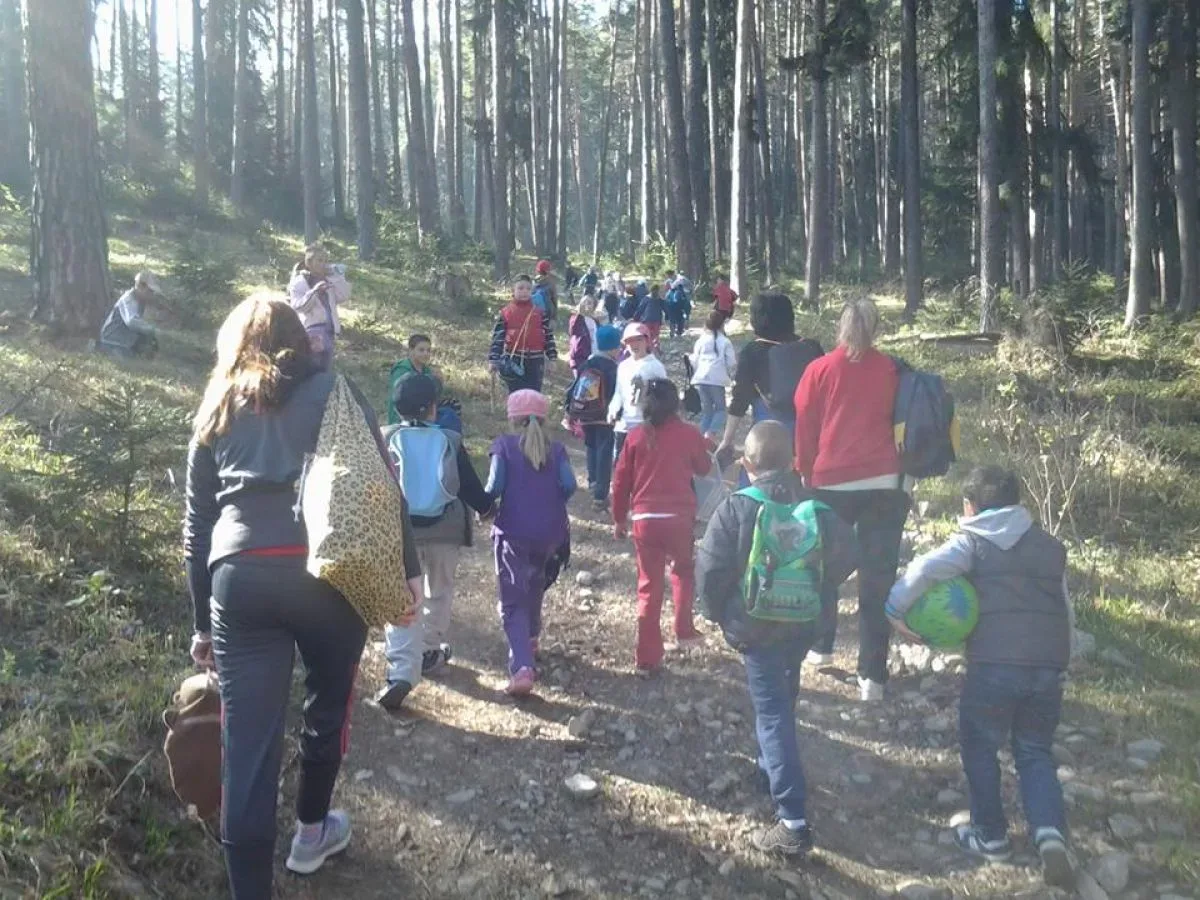
Walk at the pace of the smallest. Plan breaks at pleasant, safe spots: after a short while children want to play and move, and that counts as rest. On an ascent an adult walks right behind the child. On slippery descents you hold their hand. The child may walk ahead only on easy terrain, and only while you can see them.
What goes in the backpack
The child carries their own small backpack with a water bottle, a snack and a favourite toy or things found on the way. DAV recommends keeping the weight under 10% of the child's body weight. You carry the rest:
- a first-aid kit with plasters
- spare clothes, including underwear and a warm sweater
- rain jacket, hat or headband
- headlamp, phone with a power bank, map
- a bag for trash
- a whistle for each child
Clothing and footwear
Children overheat and cool down faster than adults, says DAV, so dress them in layers and stop early to add or remove one: base layer, fleece, rain jacket. Footwear should suit the trail and be properly laced. In tick areas, Romania's National Institute of Public Health (INSP) recommends light-coloured clothes covering arms and legs, and closed shoes without cut-outs. Sandals are not suitable.
Water and snacks
DAV gives at least 1-2 litres of fluids a day for children, drunk often and not only when they are thirsty. Snacks: fruit, cereal bars, cheese or cold-cut sandwiches. Sweets stay a small extra.
Sun and ticks
For sun: cream with a protection factor of at least 30, a hat and sunglasses (DAV). For ticks, INSP recommends repellent on exposed skin and a spray for clothes, both used as the label says and suitable for the child's age. Ask a pharmacist for a small child. After the outing, check the whole body carefully, especially the armpits, groin, legs, belly button, neck and head, and in children the hairline. A tick does not hurt when it attaches. If you find one, remove it immediately with blunt-tipped tweezers, grasping it as close to the skin as possible and pulling upward without twisting. Then disinfect the skin. If in doubt or if you cannot manage, see a doctor.
Safety rules for the child
Explain them briefly before you set off, and repeat them on the way:
- Stay in sight. Do not go ahead past the agreed spot and wait at every bend or junction.
- If you cannot see anyone, stop and stay where you are. Do not run around looking. The US National Park Service teaches children to find a tree and stay by it.
- Use the whistle. The same service advises three short blasts, a pause, then three again. The whistle is for emergencies, not for play.
- Do not eat or drink anything unfamiliar found along the way and do not touch animals.
How to keep them interested
- Observation games: counting ants, looking for beetles, who spots the next trail marking first.
- Trail markings: let them follow the signs on trees and posts and tell you whether you are still on the path.
- The map: show them where you are and how far is left to the goal.
- Announce breaks and nice spots in advance, so they have something to look forward to.
- Give them time for what they find on their own: a stream, a snail, a pebble.
When to turn back
Turn back if the weather worsens, or if someone is tired, wet, scared or feels unwell. Salvamont says plainly not to continue when you are tired or unwell. A shortened hike is not a failure, and a child who went home happy wants to come again.
How to call for help
For an accident, a lost person or a sick child, call 112 or the National Salvamont Dispatch, 0725 826 668 (0SALVAMONT). Say who you are, what happened, where you are, how many people are involved, their condition and the weather. Stay somewhere with signal so rescuers can reach you. Note where you last had signal.
Eco Junior, the association's programme for children
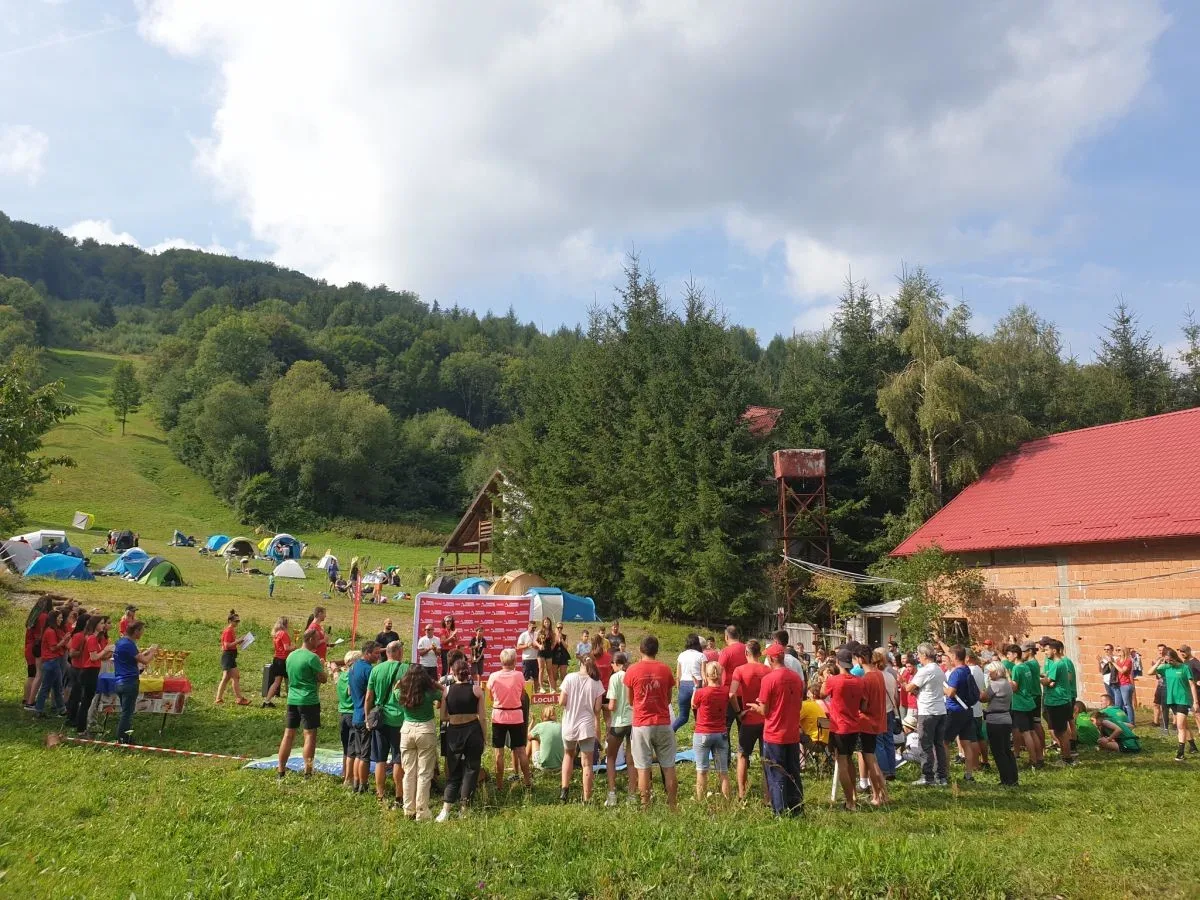
Asociația Drumeții Montane runs Eco Junior, a non-formal education programme in which children go outside, play, observe nature, and at the end talk about what they discovered. The 2026-2027 edition has two projects, ecological education and dog education. Participation is free and open to pupils from kindergarten to high school and to their teachers. Details at ecojunior.ro; the association's other activities are on the Activities page.
Frequently asked questions
From what age can children go to the mountains?
DAV also describes hikes with children aged 1-3, who are carried in a child carrier. With a small child the outing is more about play than distance.
How long should a first hike with a 6-year-old be?
The DAV guideline is up to about 5 hours of walking a day for children aged 6-10. On a first outing it is better to stay well under that.
What do I do if I find a tick on my child?
Remove it immediately with blunt-tipped tweezers, pulling upward, as close to the skin as possible. Disinfect the spot and, if you cannot manage or are unsure, see a doctor.
Which number do I call if we get lost?
112 or the National Salvamont Dispatch, 0725 826 668.