The association's statute.
The framework by which we organise ourselves, work together and carry out our activity.

This is an English translation of the statute, provided for information. The official, legally binding text is the Romanian version adopted by the General Assembly. Statutul în limba română
General provisions
CHAPTER 1. GENERAL PROVISIONS
The name of the association is “Drumetii Montane”.
The registered office of the association is in Romania, Bucharest, District 3.
The persons who join the association do so of their own free will, in order to benefit from an organisational framework for practising mountain hiking and other mountain activities, disciplines and sports.
The association is established for an indefinite period.
The association is non-political: it carries out no political activity of any kind and does not represent any political movement, group, association, formation or party.
In exercising the prerogatives of its legal personality, the association has the following: assets, badges and membership cards bearing its letterhead, an emblem, governing bodies and a registered office.
Purpose and objectives
CHAPTER 2. PURPOSE AND OBJECTIVES
The purpose of the association is to create and develop the organisational, functional and material framework whose aim and outcome is to achieve, for the benefit of its members, the following:
- promoting respect for the environment, raising young people's awareness of ecosystem protection and developing their ecological mindset;
- researching, studying, using and defending the environment; educating the association's members and all nature lovers in the use, upkeep and conservation of the environment;
- developing and forming new relationships with other clubs, associations, specialised organisations and individuals; joining together to form federations;
- encouraging and affirming the ability to practise mountain hiking;
- developing cultural programmes and presenting them at the events the association takes part in (song, poetry, sketches, graphics, caricature, ecological posters etc.);
- promoting tourism in all its forms;
- environmental protection, cleaning up tourist areas and contributing to a change of attitude towards the environment;
- ensuring that tourism activities comply with the statute and internal regulations, the rules set by the Ministry of Youth and Sport, the legislation in force and international standards;
- drawing up the yearly internal calendar, carrying it out and taking part in competitions;
- organising training for the specialists needed in sports tourism: courses, internships, meetings etc.;
- applying anti-doping programmes and fair-play programmes within its areas of competence;
- organising and running tourist information and education structures;
- recreational activities;
- developing and promoting orienteering as a sport throughout Romania, in all its forms and without any discrimination on grounds of politics, religion, race, nationality, sex or age;
- organising, leading, controlling and supporting orienteering at national level, in accordance with the law;
- printing and reproduction activities;
- audio and video reproduction activities;
- repair of electronic and optical equipment;
- repair of electrical equipment;
- intermediation in the trade of various products;
- publishing activities (newspapers, leaflets, books, guides, magazines etc.);
- software publishing;
- producing and editing audio and video recordings;
- custom software development;
- information technology consultancy;
- management (administration and operation) of computing equipment;
- web portals, data processing, website administration, web programming etc.;
- advertising and market research;
- market research and public opinion polling;
- photographic activities;
- written and oral translation;
- travel agency and tour operator activities, other booking and tourist assistance services;
- artistic creation and performance;
- repair of computers, communication equipment and peripherals;
- training dogs for search and rescue work;
- deploying search and rescue dogs in situations where they can be useful (disasters, landslides, etc.), alongside the competent authorities or independently of them, as provided by law;
- promoting and developing search and rescue activities with dogs;
- providing information, advice, education and training in search and rescue with dogs, across all search disciplines (area, rubble, water, avalanche and trailing);
- concluding cooperation agreements with the authorities and organisations responsible for emergency management.
Membership
CHAPTER 3. MEMBERSHIP
Any Romanian citizen who meets the following conditions may become a member:
- a) Minimum age of 18. Anyone under 18 needs the consent of their parents (stating that they agree to the minor practising mountain hiking), signed by them in the presence of the president or vice-president of the club.
- b) Not to be barred by a court from exercising their civil rights.
- c) To declare on their own responsibility that they are fit to practise mountain sports.
- d) To pay the association's registration fee;
- f) To take part in the association's activities for six months without being a member;
- Applications for membership are reviewed by the Board of Directors and approved by the president of the association.
Membership ends in the following cases:
- At the request of the person concerned,
- If one of the conditions in Article 8 is no longer met,
- Death.
Honorary members of the association are those persons who meet the following conditions:
- Through their attitude and actions they support or have supported the association in a special way.
- They take part in special activities to which they are invited.
- Honorary members are designated as such by the General Assembly of the association.
Honorary membership ends in the following cases:
- At least one of the conditions in Art.10 is no longer met.
- At the request of the person concerned.
- Death.
- Other cases provided by law.
- By decision of the General Assembly.
Members' rights and obligations
CHAPTER 4. RIGHTS AND OBLIGATIONS OF MEMBERS
Members with voting rights have equal rights and obligations. Honorary members have no voting rights, but may take part in the general assemblies of the association and may be elected to the Board of Directors. They may also be elected honorary president.
Members have the following rights:
- To elect and be elected to the governing bodies.
- To take part in the actions carried out by the association.
- To express freely their opinions and personal initiatives regarding the activities taking place within the association.
- To contest, within 30 days, the decisions taken within the association,
- To use the common property, but only for activities organised by the association.
Members have the following obligations:
- To behave in a civilised manner at events organised by the association.
- To take part in the general assemblies.
- To take part in at least 1/3 (for those holding management positions) and at least ¼ (for members) of the actions organised by the association; failure to do so entails the loss of the management position or of membership.
- To observe the statute and the internal rules, within the limits set by the legal framework.
Members are personally liable to the association for their actions, within the limits of this statute, the operating regulations and the existing legal framework.
Incentives, rewards, sanctions
CHAPTER 5. INCENTIVES, REWARDS, SANCTIONS
For outstanding results, members may be given incentives or rewards, in the manner established by the General Assembly or the Board of Directors.
Members of the association who breach the provisions of the internal rules or of the Statute, or the rules of civilised behaviour during activities, or who through their activity cause damage of any kind to the association, are subject to one of the following sanctions:
- Warning,
- Temporary exclusion for a fixed period, but no longer than one year,
- Permanent exclusion.
Sanctions are entered in a special register of the association. The sanctions provided for in Article 17 are decided by the Board of Directors, except for temporary and permanent exclusion, which are decided by the General Assembly. A sanction may be decided only after a prior inquiry carried out by a person appointed by the Board of Directors and only after hearing the person concerned. If, after being summoned in writing, that person refuses to attend or to give information about their act, the sanction is applied without this formality. The sanction must be applied within no more than 30 days from the date on which the act is established by the body entitled to take this measure, but no later than three months from the date on which the act was committed.
A sanction decision may be contested within 30 days of its communication. The appeal is settled by the General Assembly within no more than 30 days of its registration. The decision of the General Assembly is final.
Assets
CHAPTER 6. ASSETS
The initial assets of the association amount to 2,099 lei.
The assets of the association consist of the following:
- Monetary means,
- Material means.
The assets are established, administered, modified and liquidated in accordance with the law and this statute.
The assets come from the following sources:
- Registration fee,
- Membership dues. The amount of the dues, how often they are collected and the cases in which payment is suspended are established by the General Assembly,
- Donations,
- Own activities,
- Sales and purchases,
- Exchanges,
- Sponsorships,
- Other sources provided by law.
Organisation and functioning of the association
CHAPTER 7. ORGANISATION AND OPERATION OF THE ASSOCIATION
The bodies of the association are:
- The General Assembly,
- The Board of Directors,
- The Auditor,
- The President,
- The Vice-President,
- The Secretary.
Art.25. A. The General Assembly
The General Assembly is the governing body made up of all members with voting rights.
The powers of the General Assembly include:
- Establishing the strategy and general objectives of the association.
- Approving the budget of income and expenditure and approving the balance sheet.
- Electing and dismissing the members of the Board of Directors on the basis of applications; candidates must present their intentions;
- Electing and dismissing the President of the association, who is also the president of the Board of Directors.
- Electing and dismissing the auditor.
- Amending the articles of incorporation and the statute.
- Debating, approving and amending the internal regulations of the association.
- Receiving information on and approving the activity report of the Board of Directors, as well as other reports.
- Deciding on any change of the registered office,
- Setting the level of the registration fee and of the membership dues, as well as how they are paid,
- Setting up, reorganising and dissolving organisational structures and forms of activity.
- Establishing and amending the object of activity and the designs of the badges and membership cards.
- Deciding on affiliation or merger with other organisations.
- Deciding on the dissolution and liquidation of the association, as well as on the destination of the remaining assets.
- Settling appeals,
- Granting the title of honorary member and honorary president,
- Deciding on sanctions of exclusion from the club,
- Any other powers provided by law and by this statute.
The General Assembly carries out its activity in sessions, of two kinds:
- Ordinary sessions – annual,
- Extraordinary sessions – under the conditions provided for in the statute.
The General Assembly is convened as follows:
- Ordinary sessions – by the Board of Directors,
- Extraordinary sessions – by the Board of Directors, the President, or at least 10% of the members of the association.
The General Assembly is validly constituted if at least half plus one of the members of the association with voting rights are present. If this number is not reached, the General Assembly will be held after 7 days and will be legally constituted by the total number of those present, provided this is three or more.
The proceedings of the General Assembly are chaired by a member of the Association appointed by the Board of Directors.
The proceedings of the General Assembly are recorded in the minutes register by the secretary of the meeting, signed by the secretary and by the chair of the meeting.
The General Assembly adopts decisions. Decisions may be adopted by a simple majority of the members present.
The voting procedure is established for each meeting, as appropriate, by open or secret ballot.
The decisions of the General Assembly are enforceable from the date of their communication or from a later date, as the case may be.
The General Assembly may amend, suspend or annul its own decisions.
The decisions of the General Assembly are communicated within no more than 10 days of their adoption.
B. The Board of Directors
The Board of Directors has the following duties:
- Debates and adopts the draft internal regulations of the association and the job descriptions, and submits them to the General Assembly for debate.
- Presents to the General Assembly the activity report, the execution of the budget of income and expenditure, the balance sheet, the draft budget of income and expenditure and the draft programmes of the association.
- Reviews and endorses the President's reports, takes note of the auditors' findings and establishes the necessary measures;
- Concludes legal acts in the name and on behalf of the association;
- Takes measures to carry out the decisions of the General Assembly;
- Reviews membership applications;
- Approves the organisational chart and the staff policy of the association;
- Monitors the implementation of the decisions of the General Assembly of the association;
- Reviews and endorses the draft annual activity programme and the draft budget of income and expenditure;
- Writes off fixed assets and approves the withdrawal from use of inventory items;
- Pursues the recovery of damage caused to the association.
- Negotiates the plans for coordinating activity regarding the actions agreed as a result of affiliations or cooperation agreements with the natural or legal persons referred to in art.7 letter c).
- The Board of Directors may draw up its own internal operating regulations.
- Performs any other duties under the law, this statute and the internal rules.
The Board of Directors consists of 3 members:
- The President,
- The Vice-President,
- The Secretary.
The Board of Directors is convened in sessions as follows:
- Ordinary sessions – once a month, by the President or, in the President's absence, by the Vice-President.
- Extraordinary sessions – by the President or by a member of the Board of Directors.
C. The President
The President is elected, suspended and dismissed by the General Assembly by secret or open ballot; the president of the association is also the president of the Board of Directors.
The President has the following duties:
- Supervises and coordinates the activity of the Board of Directors.
- Represents the association in its relations with its members and with other persons and organisations.
- Concludes and terminates contracts within the limits approved by the governing bodies.
- Approves applications for membership of the association;
- Ensures that the decisions of the General Assembly and of the Board of Directors are carried out,
- Administers the assets of the association and commits, by signature, its financial operations,
- Organises the preparation of candidates for membership and is responsible for issuing membership cards.
- Is responsible for keeping the technical and operational records in accordance with the regulations in force.
- Takes any measures needed to ensure the proper conduct of the activity, in compliance with the law, the statute and the decisions of the governing bodies of the association.
If the President is unavailable, the President's duties are taken over by the Vice-President.
D. The Auditor
The auditor is appointed by the General Assembly on the basis of applications. The position of auditor is incompatible with any other position in the governing bodies of the association.
The duties and responsibilities of the auditors are those provided for in the regulations in force and in the internal rules of organisation and operation, supplemented by the following:
- Checks how the assets of the association are administered.
- Draws up reports based on these checks and presents them to the General Assembly.
- May attend the meetings of the Board of Directors, without voting rights.
The association's insignia
CHAPTER 8. INSIGNIA OF THE ASSOCIATION
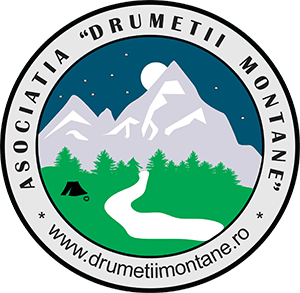
The emblem of the “Drumetii Montane” Association.
The badge and the flag of the association have the same features as the emblem.
Transitional and final provisions
CHAPTER 9. TRANSITIONAL AND FINAL PROVISIONS
The “Drumetii Montane” Association loses its legal personality in the following cases:
- By decision of the founding members,
- When the purpose of the association can no longer be achieved,
- When the number of members falls below the limit provided by law,
- Due to insolvency,
- By merger with another association.
The destination of the assets in the event of the dissolution of the association is established by the founding members in accordance with the law.
The provisions of this statute are supplemented by the relevant legal provisions. This Statute was adopted by the General Assembly.
Do you have a question about the association?
We are here to give you information about our activity.
Our values bring us together.
Discover the people and the projects behind the association.