
The idea of setting aside natural areas from degradation by the human population, in order to preserve grandiose sites intact and to protect rare or extraordinary biotopes or places on the verge of disappearing, is not new. It emerged at the end of the 19th century in the Anglo-Saxon countries with the creation of the first national parks. In Romania the first park of this kind was Retezat National Park.
A national park is a relatively vast territory whose biological richness, landscape quality, cultural interest and preserved historical character justify protection and management that guarantee the permanence of this heritage, considered exceptional.
The establishment of Retezat National Park in 1935 is the official recognition of the richness of the natural heritage of the Southern Carpathians and of everyone's need to preserve it. The area of the park belonged to the Royal House, being a hunting estate. In 1979 the park became known as a Biosphere Reserve thanks to its status as a protected natural area of national and international interest.
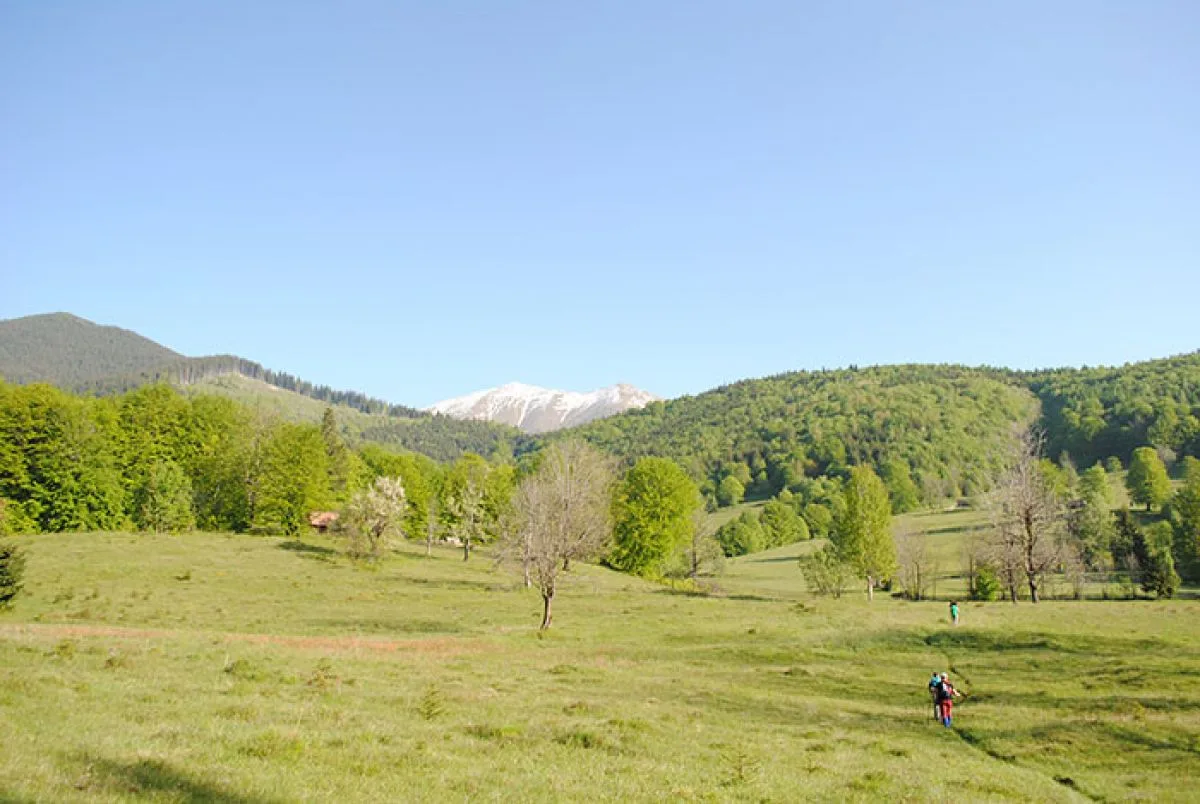
Located in the Southern Carpathians, in Hunedoara county, the park covers an area of approximately 38,000 ha and has an altitude ranging between 800 m and 2509 m. A great variety of igneous, metamorphic and sedimentary rocks make up the territory of the park. The complex geological structure of the mountain territory has given rise to diverse and spectacular landforms and has created many habitats for different species of plants and animals. The original and complex landscape of the park is made up of sharp ridges, heavy-profiled crests, glacial cirques and valleys. All these are the result of the action of the climatic and hydric factors on the lithological substrate.
The climate is temperate mountain, with Mediterranean influences in the south-western part, while at heights exceeding 2000 metres the climate is alpine.
The hydrographic network is rich and complex, consisting of streams, rivers and lakes of glacial origin. Lake Bucura is known as the largest glacial lake; it lies at an altitude of 2041 m and has an area of approximately 9 ha. Lake Zănoaga is the deepest lake, with a depth of 29 m. There are also nival lakes (Groapele, Bucurelul, Tăul dintre Brazi) and lakes of karst origin (Tăul fără Fund, Soarbele).
The natural heritage of Retezat is particularly valuable thanks to the rare species found within it. The rare species of pink, lousewort, whitlow-grass, angelica, edelweiss, wormwood or black vanilla orchid are true jewels of Retezat. A third of all the plant species existing on the territory of Romania are found in Retezat. We find forests of hornbeam, sessile oak and lime, together with alder, especially on the sunny slopes of the Râul Mare valley and the Jiul de Vest basin. The more sheltered places give rise to vegetation of a thermophilous character: lady's bedstraw, hairy rock-cress, hare's-foot clover, dog rose, forests of beech or beech mixed with fir and spruce. At altitudes above 1700 metres we find thickets of dwarf pine, alpenrose, bilberry, cowberry, dwarf juniper and gentian. The alpine level includes species of fescue, giant fescue, sedge, mat-grass, bladdernut, currant and bentgrass.
The fauna of the Retezat park is just as rich and diverse as its flora. Retezat National Park is home to 55 species of mammals (22 of which are protected by law). Among the mammals we mention: the chamois, roe deer, red deer, bear, wolf, lynx, wild boar, wildcat, squirrel, hazel dormouse, badger, otter, pine marten, weasel, etc. Birds are also represented by a multitude of species such as: eagles, the capercaillie, the eagle owl, the hazel grouse, the wallcreeper, the swift, the raven, the rock thrush, etc. Reptiles are also present through species of snakes (the common adder, the nose-horned viper). Thanks to the hydrographic network, aquatic fauna is also represented by fish (lake trout, rainbow trout, grayling).
This year, from 1 to 3 August 2014, Retezat National Park hosts the Drumeții Montane Festival, which allows the discovery or rediscovery of this exceptional natural heritage. Anyone, whether they wish to take part in the activities or simply go for a weekend walk, is welcomed by the festival organisers. The festival activities are free of charge and prizes will be offered, provided by the event's supporters: Ch-Center Hosting, Dwyn.ro , Lew.ro, Doppelherz, VitalisGroup.ro, AuroMedia, Cuculis and Associates Law Office, Mobila Dalin, Touch Antibacterial, PitiClic, IBU Publishing, O & R Bacău, Mozartinno, Belkin, Craimont, ListaFirme.ro, Elmo-Print, A-Z Cursuri, Hotel Peștera, MagazinulArtistilor.ro, CEDES Cercetare Dezvoltare, Braduț Associated.
We thank our partners: the National Union of Students in Romania, Music Channel Romania, the Cheile Buții Tourist Complex, Retezat National Park, the National Forest Administration Romsilva..
Retezat National Park is one of the most important Carpathian ecoregions in terms of biodiversity, representing a priority in the nature protection programmes of the Carpathians.

Retezat National Park,an Unforgettable Experience
Recommended articles
Further on, in the community.
Carnavalul Zăpezii, 27th Edition
Stage I of the CNCTE 2026
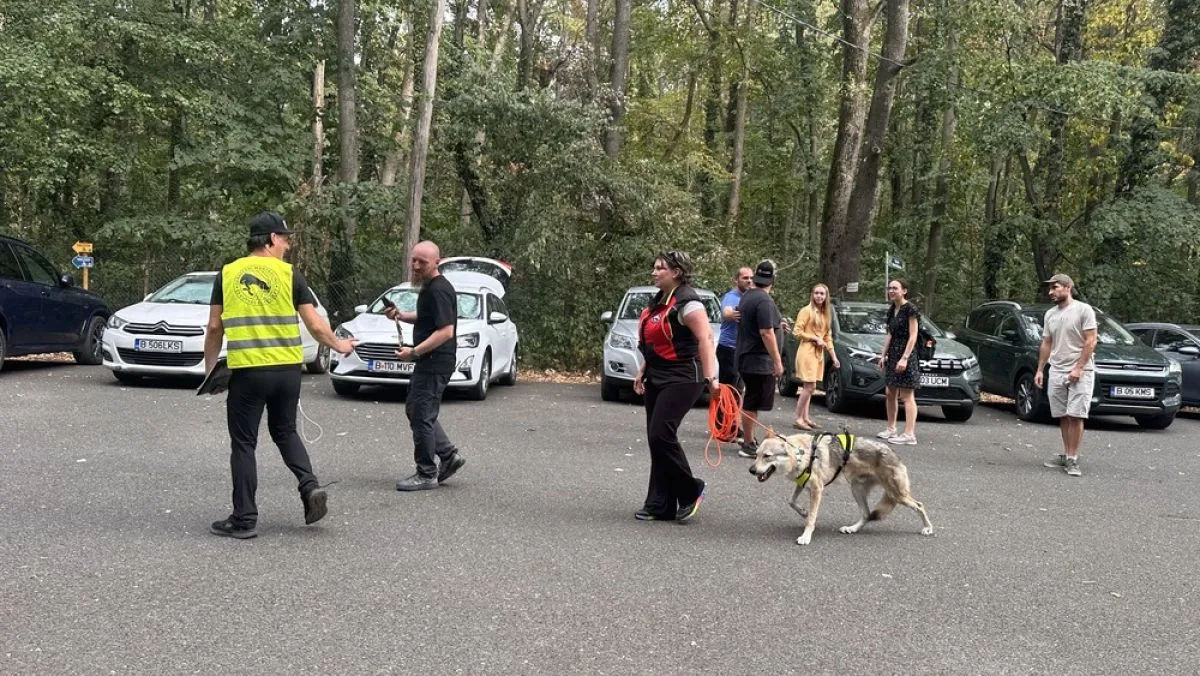
The First Intensive Mantrailing.ro Workshop
Misiunea Prietenilor Canini, Bucharest, 4–6 September 2025