For a one-day hike, bring enough water to drink regularly all the way, a light meal beforehand, snacks that keep, and something more filling for the midday stop. Leave alcohol at home, don't drink stream water without treating it, and leave nothing behind, not even fruit peels.
How much water to carry
There is no single number. REI's guide, from an American outdoor retailer, gives a general reference of half a liter per hour at moderate effort and moderate temperatures, and a liter or more per hour for sustained effort in high heat. On a five- or six-hour hike that means several liters on a warm day, and much less on a cool day at an easy pace.
It varies because you sweat more in heat, on long climbs, with a heavy pack and in direct sun.
- Drink little and often, a few sips at every break, not a liter at once.
- Don't wait until you are very thirsty. A regular rhythm is the cautious choice.
- Too much is no good either. REI warns that too much plain water without salty food can lead to hyponatremia, meaning too little sodium in the blood.
- Start with a full bottle and check the map for mountain huts (cabane). Many ridges have no water at all.
Before you set off
Eat a light meal one or two hours earlier, something you are used to: bread, oats, eggs, yogurt, a banana. The morning of a hike is no time for new or very heavy food. Drink water before you start too, not only on the trail.
On the trail: little and often
Park guides say to eat and drink steadily to replace what you use, not only at lunch. A small snack every hour or two helps more than one big meal after four hours with nothing.
What keeps well in a backpack:
- sandwiches with hard cheese or dry salami, wrapped well;
- nuts, peanuts, seeds, dried fruit (apricots, raisins, dates);
- pretzel rings (covrigi), biscuits, cereal bars;
- chocolate (it melts in a heatwave, so keep it in the cooler part of the pack);
- sturdy fruit: apples, bananas, mandarins;
- something salty: pretzels, hard cheese, salted nuts.
Something salty has a purpose: sweat takes salt as well. For an ordinary day hike a salty snack is usually a good start. Some guides also mention electrolyte drinks, mostly for long effort in heat; if you have health problems or take medication, ask your doctor.
In heat and in cold
In heat, start early, carry more water, rest in the shade and pick food that doesn't spoil: dried fruit, nuts, pretzels. Leave anything that needs a fridge at home.
In cold weather a flask of hot tea is useful, and you keep snacks within reach so you don't stand still looking for them. Long stops chill you quickly, so eat something small and carry on. Water in bottles can freeze, so keep the bottle inside the pack, close to your back.
Water from springs and streams
A clear stream is not safe water. The US Centers for Disease Control (CDC) say that even clear mountain water can carry germs from human or animal waste, so drinking it untreated is generally not safe.
- Boiling is the most reliable method: one minute at a rolling boil, three minutes above about 2,000 m. Let the water cool.
- Portable filters stop parasites, and those with very fine pores also stop bacteria, but not viruses. Read what the maker promises.
- Tablets kill viruses and bacteria, but some do not stop all parasites.
- Cloudy water should be filtered first, whatever treatment you choose after.
The simplest option on a day hike: take water from home or from a hut and don't depend on random springs.
Food for children
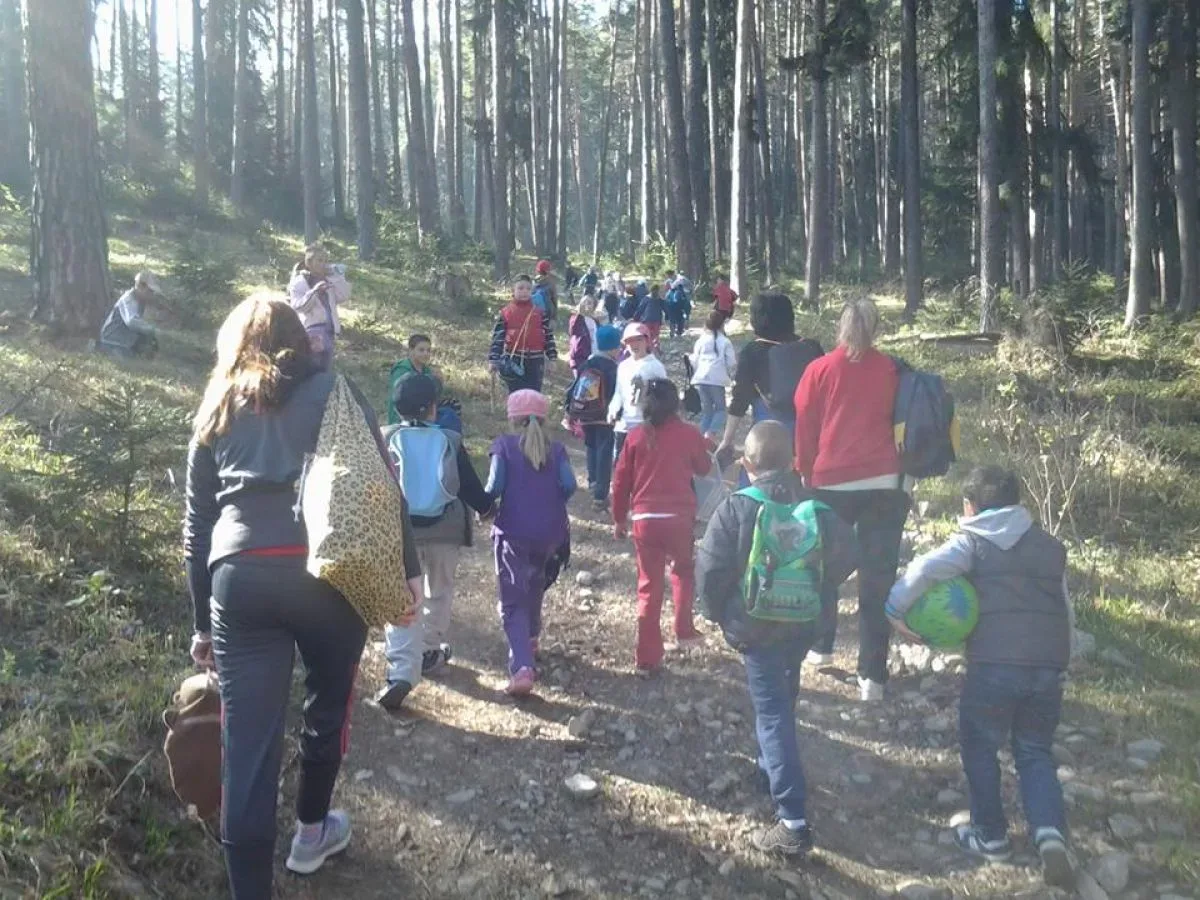
Children get hungry fast, so bring several small snacks rather than one big one, and let them pick from what you packed. Each child has their own bottle so you can see how much they drink. Choose things that are easy to eat on the move: biscuits, apple slices, pretzels, small bits of dried fruit. Small hard pieces such as whole nuts are not suitable for young children. The same rule applies in Eco Junior, the association's programme for children: each pupil brings a water bottle and, where needed, a snack. Details are on ecojunior.ro.
What not to bring
- Alcohol. It has no place on a mountain: you need attention and balance on difficult ground. Keep it for the evening.
- Food that spoils in heat: mayonnaise, creamy fillings, fresh dairy, raw meat.
- Heavy meals right before a climb.
Packaging, leftovers and animals
Whatever you carry up, carry down. The rules of Piatra Craiului National Park ban abandoning waste of any kind and require visitors to take it out of the park, to designated places. Take your banana peels, apple cores and orange peels with you too: they are food for animals, and what you offer teaches them to approach people. Keep a bag for rubbish in your pack.
Don't feed wild animals. The US National Park Service explains that human food harms their diet and makes them seek out people, and they can become aggressive.
In bear areas, don't keep food in your tent. The visiting rules of Piatra Craiului National Park say to leave food outside the tent and, when camping, to hang it in branches at least two meters high, away from the trunk. On a day hike, don't leave a backpack with food unattended and don't throw scraps beside the trail.
Frequently asked questions
How much water should I take for a day hike?
One reference is half a liter per hour at moderate effort, according to REI, and more in heat. Carry a reserve and check the map for safe water points.
Can I drink from a mountain stream?
Not without treatment. Boil it, or filter and treat it, or bring water from home.
What should I eat in a heatwave?
Dried fruit, nuts, pretzels, whole fruit and something salty. Avoid anything that needs a fridge.
Can I leave fruit peels on the mountain?
No. Take them with you like any other rubbish, so you don't attract animals or spoil the place.